Saturday, February 28, 2009

February 18, 2009, Volume 05, Number 06

The Japan Considered Podcast for February 18, 2009, is up and running.

Click here for the audio file of today's program

Click here for a transcript of today's program

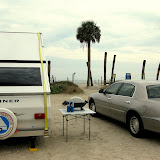
Welcome today from the shore of the Atlantic Ocean. At Edisto Beach State Park, South Carolina. Back at site # 18 again, and enjoying the view. What a great place to produce a podcast! You can see more of Edisto Beach at:

http://mobilestudiotravels.blogspot.com/

Today we'll focus on the problems of Japan's political party system at the national level. Really, the "trials of Taro," or, more politely, the challenges facing Prime Minister Aso, are only a manifestation of that more basic problem. As presently configured, Japan's national political party system has proven incapable of recruiting effective, competent central political executives. And Japan overall is paying the price. I suggest that this situation can't last forever. That we're likely to see the beginnings of fundamental change in the party system during the next general election.

Please continue to send your comments and suggestions for the program directly to me at RobertCAngel@gmail.com. I appreciate them all.

Friday, February 06, 2009

February 06, 2009, Volume 05, Number 05

Click here for the audio file of today's program

Click here for a transcript of today's program

Thanks for dropping by again today, to you long-time listeners. And a hearty South Carolina welcome to those of you who have found us for the first time. Each week, or most weeks, anyway, on this program we consider developments in the news concerning Japan's domestic politics and/or the formulation and implementation of foreign policies.

This week we consider two recent international developments. Japan's recent dispute with Russia over the terms of access to one of the Northern Territories islands, Kunashiri. And the significance of what appears to be North Korea's latest missile diplomacy initiative.

Following that we return to the even more turbulent environment of Japan's domestic politics. With brief consideration of the role prefectural and local individuals and organizations may play in sorting out the current mess in Nagatacho.

Please continue to send your comments and suggestions to me at RobertCAngel@gmail.com. We've had a big increase in the volume of e-mailed comments recently. Thanks for the effort. They all help to improve the program.

Friday, January 23, 2009

January 23, 2009; Volume 05, Number 04

January 23, 2009; Volume 05, Number 04

Click here for the audio file of today's program

Click here for a transcript of today's program

It's Friday again, and thanks for dropping by. Another excellent interview for this program. Timely, and full of useful information. Dr. Ed Lincoln, Director of the Stern School of Business's Japan-U.S. Center at New York University, agreed to come on to help us understand how bilateral economic relations between Japan and the United States are likely to change under the incoming Obama Administration. Ed is far closer to the new Administration and the people likely to assume senior policy posts than am I. And, his political and econo-political perspective is quite different than mine. So his comments at this time are especially valuable.

It's another longer program than we usually have. But I'm sure you'll agree it's well worth the extra time.

Tuesday, January 20, 2009

January 20, 2009; Volume 05, Number 03

January 20, 2009; Volume 05, Number 03

Click here for the audio file of today's program

Click here for a transcript of today's program

090112EdistoBeachState Park
Click Photo for Picasa Album

Welcome back to another edition of the Japan Considered Podcast. A bit delayed by a five-day visit to Edisto Beach State Park, on beautiful Edisto Island, South Carolina. Right on the shore of the Atlantic. Click on the photo on the left to see some photos of the trip. Even warm enough to kayak one day!

This week I've got another treat for you. Mr. Gregg Rubinstein, principal of GAR Associates in Washington D.C., agreed to join us again to follow up Skipp Orr's interview with discussion of security policy issues between Japan and the United States during the incoming Obama Administration. So, enjoy. An excellent overall assessment of what we're likely to see in this increasingly important aspect of the bilateral relationship.

Friday, January 09, 2009

January 09, 2009; Volume 05, Number 02

January 09, 2009; Volume 05, Number 02

Click here for the audio file of today's program

Click here for a transcript of today's program

Dreher Island State Park, SC
Click for More Photos

Greetings again from Columbia, South Carolina. Just back from Dreher Island State Park with the Japan Considered Mobile Studio. A beautiful place to visit. Right on the shore of Lake Murray, and less than an hour from Columbia. Here are some photos on the left. Just click the picture to go to the Picasa website.

This week we have another treat. This is two in a row. You'll soon be spoiled! The media in Japan is full of articles about the effect of presidential administration change in Washington on U.S.-Japan Relations. Most of those articles have been either blatantly speculative, or showing signs of tight political spin. A number of you have written in asking about this as well, and suggesting that I spend more time on it.

Well, this week we will. Robert M. [Skipp] Orr agreed to join us via Skype-Phone from his home in Kamakura, Japan. It would be hard to find anyone more qualified to discuss this issue. Skipp played an important role in the Obama presidential election campaign. Further, as a former senior U.S. government official, academic, and businessman, he's developed an incredibly broad range of personal contacts in Japan over the past three decades. So, he's the fellow to go to for some answers. And we did.

Please continue to send your comments and suggestions directly to me at RobertCAngel@gmail.com. They've been especially helpful during the past few weeks. And I thank you for taking the time to write. Even if you do not receive a direct reply, be assured I've read your note, and will take it into consideration when planning new programs.

Friday, January 02, 2009

January 02, 2009; Volume 05, Number 01

January 02, 2009; Volume 05, Number 01

Click here for the audio file of today's program

Click here for a transcript of today's program

Happy New Year to you and yours, from all of us in Columbia, South Carolina. I hope you will find for another year enough of interest on the Japan Considered Podcasts to bring you back for more. Now that I'm an officially retired person, I can no longer use the "day job got in the way" excuse for not producing programs on time. So hopefully we'll have even more of them this year. No promise! But I'll do my best.

This week I have a real treat for you. Dr. Jim Auer of Vanderbilt University agreed at the last minute to do an interview to explain the ins and outs of the collective self defense issue for us. Even though he was in the midst of year-end and year-beginning family festivities over there in Tennessee. Thanks, Jim!

Quite a few of you wrote in after the last program asking for more detail about this subject. And since it's well beyond my area of expertise -- even my presumed area of expertise -- I thought it best to call in an expert.

I'd hoped also to consider the timing of Japan's next general election. But that didn't work out. Next time for sure. There's lots of interest for us to consider there. Even though Japan's media has been full of the topic for the past couple of weeks.

Wednesday, December 24, 2008

December 24, 2008; Volume 04, Number 35

December 24, 2008; Volume 04, Number 35

Click here for the audio file of today's program

Click here for a transcript of today's program

Thanks for dropping by again today. And Merry Christmas and Happy New Year to you and yours from all of us. I hope you have just the sort of year-end holidays you have been wishing for.

Today's Christmas eve. Only Wednesday. Earlier than usual this week, because of certain Holiday confusion from tomorrow onward. It may be a while before I even get this posted to the Net!

Today we begin by considering Japan's struggle with response to the U.N.'s call for support for the international Somalian antipiracy campaign. Once again Tokyo is forced to confront the thorny problem of collective self defense. And it appears to be no easier this year for Prime Minister Aso than it was for Prime Minister Abe.

Then we turn to domestic politics again to follow the "Trials of Taro." Whose position appears to be more and more difficult, if possible. Both the Traditionalists and the Reformists have intensified pressure on him. This week we focus on Yoshimi Watanabe's Lower House vote today for the Opposition-proposed dissolution resolution. And its significance for Japan's domestic politics. Quite a dramatic event.

As always, please continue to send your comments and suggestions to me at JapanConsidered@gmail.com. They make excellent reading. And help me to plan future programs. Even if you don't receive a reply, you can be sure that I've read and considered your note.

Friday, December 19, 2008

December 19, 2008; Volume 04, Number 34

December 19, 2008; Volume 04, Number 34

Click here for the audio file of today's program

Click here for a transcript of today's program

Thanks for tuning in again today. Back home in the regular studio, with lots to consider again this week. We've neglected Japan's international relations for some time now. Thanks to those of you who've written in to remind me about that. So, let's make up for it this time by taking a closer look at the last round of the Six-Party Talks held in Beijing from the 8th to the 11th. And what they mean for Japan's diplomacy.

Then, we'll turn our attention to the Dazaifu Summit. A historic meeting of the leaders of Japan, China, and South Korea, held on Saturday, the 13th, in Dazaifu, Fukuoka. Quite an event. One Japan has been proposing for over a decade now. A good solid meeting, with one quite encouraging development. A frank exchange of views between Japan's prime minister and China's premier over the Senkaku Islands.

Friday, December 05, 2008

December 05 , 2008; Volume 04, Number 33

December 05 , 2008; Volume 04, Number 33

Click here for the audio file of today's program

Click here for a transcript of today's program

Back again. This time from the shore of beautiful Lake Wateree State Park. Producing the program from the Mobile Studio in an ideal setting. No excuse not to be upbeat today!

This week we look briefly at Japan's conduct of international relations. Focusing on the frenzied speculation in Japan's media about the effect of the incoming Obama Administration on U.S. relations with Japan. Then we consider very briefly some modest progress in the Six-Party Talks on North Korea's nuclearization plans.

Then we return to what has almost become "The Trials of Taro," with a look at recent developments -- perhaps significant -- within the Liberal Democratic Party. And how they are likely to affect Prime Minister Aso's future. The future of the LDP itself, for that matter! This includes appointment last week of Yoshinobu Shimamura as a spokesman assistant to Prime Minister Aso. An unexpected development that may or may not matter.

Thanks again for your cards and inquiries about the future of this program, and of the Japan Considered Project, after my retirement from the University of South Carolina. Response to both has been so encouraging that I plan to continue on. So, send your suggestions for the program, and for the overall project, that you can see at www.JapanConsidered.com.

Monday, November 17, 2008

November 14, 2008; Volume 04, Number 31


November 14, 2008; Volume 04, Number 31

Click here for the audio file of today's program

Click here for a transcript of today's program

Thanks for dropping in again this Friday. We're slowly getting back to our regular weekly schedule. Hopefully, it will last. But no promises.

This week we return to the Tamogami Essay Incident, considering General Tamogami's testimony before the Upper House Foreign Affairs and Defense Committee on Tuesday, and the reaction to that testimony. We also consider the significance of 94 additional active duty Air Self Defense Force officers submitting essays for the same contest, and what that means for military discipline and supervision of military training.

Then, at long last, we return to the topic of political reform, or 'seiji kaikaku' that we began considering week before last. And nearly complete it before the Old Clock on the Screen went into emergency blinking.

Thanks too for your e-mailed messages. Your comments and suggestions for the program are most helpful. Agree or disagree, they're all valuable. So keep 'em coming.

Friday, November 07, 2008

November 7, 2008; Volume 04, Number 30

November 7 , 2008; Volume 04, Number 30

Click here for the audio file of today's program

Click here for a transcript of today's program

It's Friday again. Here in the Mobile Studio, at Lake Wateree State Park. And I'm still on schedule. Remarkable, given all that's been going on around here. This week we have another "extended program," to put it politely. That is, one far longer than our agreed-upon 25 minutes or so. And I didn't even get to complete discussion of political reform, or "seiji kaikaku"!

This week we take a look at the latest Ministry of Defense flap. This one concerning the behavior of a senior uniformed officer, Air Force Chief of Staff, Toshio Tamogami. Who's written an essay in which he flatly contradicts important aspects of Japan's foreign policies. Knowing the essay would be published for all to read and comment upon. Quite a serious issue. And one that takes some time to consider responsibly.

Then we consider the timing of the next general election. With focus on the motivations of Prime Minister Aso and the opposition parties. This issue too is more complex than it might first appear to be. So, by the end of a discussion that only scratches the surface, we're well over time. Though I think it's important to consider the significance of public funding on the timing, and the actual effect of the election, once it's held.

Again, thanks for the e-mailed comments and suggestions for the program. I read every one of them. And take them into consideration when planning future programs. Keep 'em coming!

Friday, October 31, 2008

October 31, 2008; Volume 04, Number 29

October 31, 2008; Volume 04, Number 29

Click here for the audio file of today's program

Click here for a transcript of today's program

It's Friday again. And I'm back on schedule, it seems. Well, for a while, anyway. It's hard to tell these days what the next week will bring. Thanks for tuning in.

Today we begin with by considering some significant recent international developments. First, reaction from Asia's major capitals to election of Taro Aso as Japan's prime minister. Then Chinese reaction to Prime Minister Aso's visit to Beijing on October 24th. And the speech Aso gave in the Great Hall of the People. Then a brief look at Japan's continuing reaction to Washington's decision to remove North Korea from the Department of State's list of terror-sponsoring nations.

Program before last I promised to take a closer look at the meaning of "reform." And finally on this program I have the first part of that complex subject. What is "political reform"? What are the objectives of Japan's political reformers. And so on. Not enough time to finish the consideration. So that will have to wait until the next program. Hopefully, next week.

As always, thanks for your attention to the Japan Considered Podcast.

Monday, October 27, 2008

October 27, 2008; Volume 04, Number 28

October 27, 2008; Volume 04, Number 28

Click here for the audio file of today's program

Click here for a transcript of today's program

Good Monday morning, and thanks for joining in today again. Today's show is a real treat. An interview with Mr. Gregg Rubinstein, Principle of GAR Associates in Washington, D. C. Gregg's a frequent contributor on this program. When I can get him! And always has something interesting to say about Japan's foreign relations and the U.S.-Japan relationship.

This interview was recorded via SkypePhone last Monday, the 20th, at just this time. And I'm finally getting it posted on the Web. Better late than never. So, enjoy Gregg's comments on the current situation.

Next time I'll return to the subject of political reform in Japan, and how we assess it.

Friday, October 03, 2008

October 3, 2008; Volume 04, Number 27

October 3, 2008; Volume 04, Number 27

Click here for the audio file of today's program

Click here for a transcript of today's program

Thanks for dropping by. Today we consider the emergence of Taro Aso as a "Popular" candidate for the LDP presidency. And a victorious one, at that. How Aso transformed himself from a politician very unpopular with Japan's public to one who could campaign for the LDP presidency as the "popular" choice. And win. Including identification of changes in Japan's domestic political environment that inspired that transmogrification. And what all this will mean for Aso's conduct of the premiership.

Next time we'll focus on political reform, or "seiji kaikaku," and what it means for domestic politics in Japan today.

Thursday, September 18, 2008

September 14, 2008; Volume 04; Number 26

September 14 , 2008; Volume 04, Number 26

Click here for the audio file of today's program

Click here for a transcript of today's program

Today we consider what really motivated Prime Minister Fukuda on Monday, September 1st, to announce his intention to resign the premiership. My explanation is considerably different from what appears to be consensus opinion within Japan's political media.

In brief, I doubt that Fukuda was motivated by frustration with the job, with himself, or with others. And that he just threw in the towel. Irresponsibly, carelessly, or selfishly.

I believe Fukuda's resignation represents a carefully orchestrated effort to save the Traditionalist character of the LDP, while maintaining the LDP as Japan's majority parliamentary party.

And, I believe this difference in interpretation helps us better to understand what's actually going on now within the LDP. And probably to better understand the behavior of Taro Aso should he be elected as the LDP's next president, and Japan's next prime minister. And as of today, at least, it seems likely that the race is Aso's to lose.

It further suggests to me that Aso will assume the LDP presidency trying to ride two horses: One to maintain the public approval that he and most everyone else now recognizes as essential to keeping his job; and another with which he'll try to persuade the LDP's Reformists not to bolt the Party. But without allowing significant reforms in the way the LDP has traditionally operated.

I've never tried to ride two horses at once. But it looks to me like a dangerous trick!

Friday, August 22, 2008

August 22, 2008, Vol 04, No 25 Metraux Interview

August 22, 2008; Volume 04, Number 25

Click here for the audio file of today's program


Click here for a transcript of today's program

Greetings again from the Japan Considered Project Studio. Following a massive computer crash. Of my own making, by the way! A crash that wiped out a 320-gig hard drive. And worse, the latest backup of that drive. Fortunately, an earlier backup survived. So only data from early July onward was lost. But that was enough to slow things down! Oh well ....

Puzzling news on Japan's domestic political situation continues to flow from Tokyo. So, to better understand the current situation, and hopefully, to avoid more surprises in the future, I've asked Professor Daniel Metraux of Mary Baldwin College in Virginia to join us this week. To explain the current ruling coalition from the perspective of New Komeito. Daniel has been researching the Komeito and Soka Gakkai for decades. And knows what he's talking about.

As always, continue to send your comments and suggestions for the program directly to me at RobertCAngel@gmail.com. I read them all and take each one into consideration when preparing new programs.

Friday, August 08, 2008

August 8 , 2008; Volume 04, Number 24

August 8 , 2008; Volume 04, Number 24

Click here for the audio file of today's program

Click here for a transcript of today's program

Thanks for dropping by today. Good to be back behind the microphone after a 23-day RV camping and kayaking trip. Have a look at some photos from the various campgrounds and surrounding mountains on the Mobile Studio Travels page.

This week we have a special treat. Dr. Edward Lincoln of NYU's Stern School joins us via the SkypePhone to discuss the economic significance of Prime Minister Fukuda's August 1 cabinet reshuffle. Ed's comments were so interesting that I included the full interview, rather than the usual out-takes. I think you'll agree that it's well worth the time today.

Thanks to all of you who wrote e-mails asking about the next program. Glad to know you're interested. And continue to send your comments and suggestions directly to me at RobertCAngel@gmail.com. I enjoy reading them.

Next week we'll return to a more normal schedule, with focus on the significance of recent developments in Japan's relations with Mainland China and Korea.

Monday, July 14, 2008

Japan Considered Podcast for July 14, 2008; Vol 4, No 23


July 14, 2008; Volume 04, Number 23

Click here for the audio file of today's program

Click here for a transcript of today's program

Just a quick hello this morning, to let you know Japan Considered Podcasts will be arriving only sporadically for the next few weeks. Until mid-August. Due to my travel schedule. WiFi's not always available in the more remote parts of the country. Though I'll check in on Japan's domestic political and international news when I can. And put up a program when the WiFi connection is especially good. Sorry for the inconvenience.

I should be gone by now. But just quick mention this week of three important topics. First, the effect of Japan's participation in the Toyako G- 8 Summit on domestic politics in Japan. Then, the Beijing meeting Thursday, Friday, and Saturday of the six countries trying to work out a peaceful resolution of North Korea's nuclear provocations. And finally, brief mention of former Kochi Governor Daijiro Hashimoto's announcement that he's decided to form a new national political party. Before, not after, the next general election. Interesting development

I'll discuss all of these topics in more detail in the weeks and months to come. So, stay tuned, and continue to send your comments and suggestions for the program to me at RobertCAngel@gmail.com.

Friday, July 04, 2008

Japan Considered Podcast for July 4, 2008

July 4, 2008; Volume 04, Number 22

Click here for the audio file of today's program

Click here for a transcript of today's program

Welcome again. And Happy Fourth of July! I hope your celebration is going well today. We have a couple of interesting topics to cover again. This time from the Mobile Studio, parked at Iron Station, in our Neighbor to the North. You may hear the sound of gunfire in the background. No, we're not under attack. As far as I can tell. It's just the way they celebrate July 4th here abouts. Quite a sound!

This week we begin with a follow-up look at Japan's response to President Bush's decision to remove North Korea from the list of state sponsors of terrorism. Nothing very surprising. The real test of the significance of this issue is yet to come.

Then we shift to domestic politics, to consider a proposal recently made by LDP Upper House Member, Ichita Yamamoto. To change the rules under which an LDP president is elected. Yamamoto's proposal has received virtually no attention in Japan's political press. But I think it could well be important in the future. If, as I suspect, Yamamoto is raising the issue with the support of a larger number of reformers within the LDP. We have to review Junichiro Koizumi's experience back in 2001 to appreciate the potential of this issue.

Thanks for all of the e-mailed comments and suggestions. Again, you don't have to agree with my interpretations to have your e-mails read and taken seriously. I read each one. It's become impossible to respond individually to every note. But, even if you don't receive a reply, be confident that your effort isn't wasted. Send them to RobertCAngel@gmail.com. And click on over to the Japan Considered Website at www.JapanConsidered.Com for additional background on Japan's domestic politics and conduct of international relations.

Monday, June 30, 2008

June 27, 2008; Volume 04, Number 21

Click here for the audio file of today's program

Click here for a transcript of this program

Thanks for dropping by again this week. Out in the Mobile Studio again. This time in a new State Park. Have a look at the photos on the transcript. You'll be amazed.

This week has been relatively quiet in Japan's domestic politics and conduct of international relations. But there are a few things we simply can't ignore. Most important is Japan's response to the Bush Administration's decision to de-list North Korea as a state sponsor of terrorism. In return for an overdue "report" on their nuclear activities.

I'd hoped also to look briefly at the efforts of Upper House Member, Ichita Yamamoto, to revise the rules by which an LDP president is elected. Didn't get to it. It will have to wait until the next program.

Which, by the way, is scheduled for July 11th. Friday after next. Since the 4th is a holiday here.

Continue to send your comments and suggestions to me at RobertCAngel@gmail.com

Oh, and have a look at the Google search facility that I've added to the main web page of the Japan Considered Project website, and to the main page of the Podcasts section. Let me know how it works for you. And thanks, Michael, for the suggestion!